

TL;DR:
- Iterative web design involves repeated cycles of prototyping, testing, and refining to meet real user needs. It reduces project risk by validating assumptions with actual users and supports continuous improvement even after launch.
Iterative web design is defined as a cyclical methodology where teams repeatedly prototype, test, analyze, and refine a website until it meets real user needs. Unlike traditional single-phase launches, this approach treats every version of a site as a working hypothesis rather than a finished product. The iterative design process reduces project risk by 50–80% compared to one-time launches, because teams validate assumptions with real users before committing to costly builds. User-centered design principles sit at the core of this methodology, making feedback loops and data-driven testing the primary tools for every design decision.
What is iterative web design and how does it work?
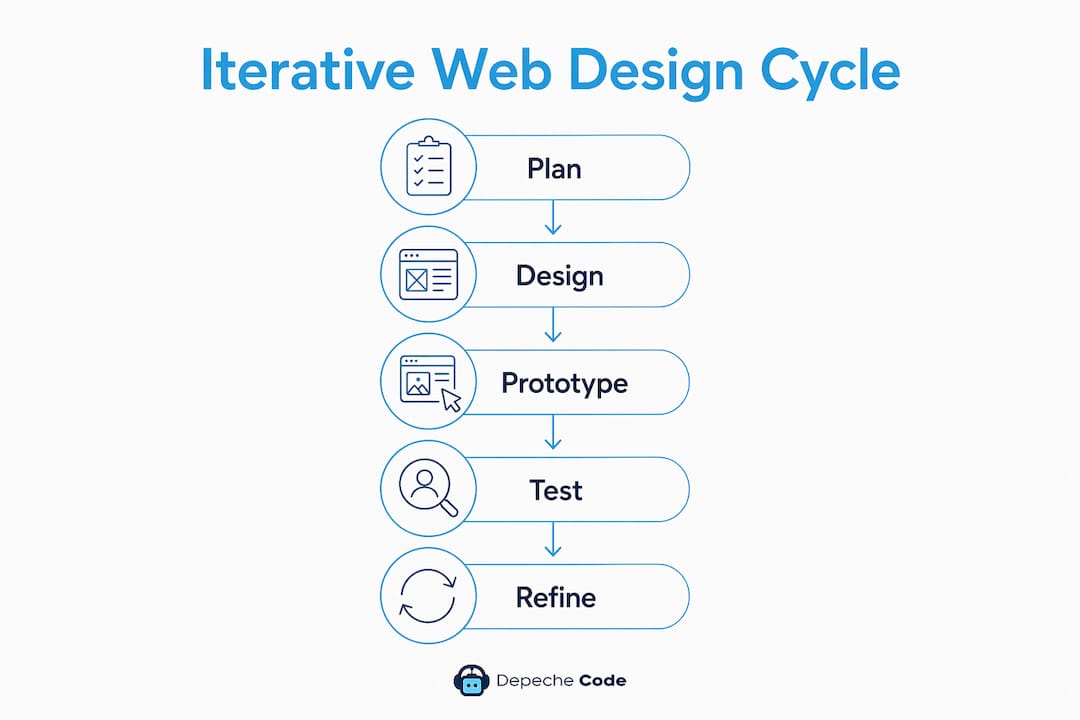
Iterative web design is a structured, repeating cycle of five core stages: planning, designing, prototyping, testing, and refining. Each cycle produces a version of the site that is measurably better than the last. Teams complete each iteration in 1–4 weeks depending on project complexity, which keeps momentum high and prevents the stagnation that kills traditional waterfall projects.

The process is non-linear by design. A team might finish a round of user testing and loop back to the planning stage because the data revealed a flawed assumption. That flexibility is the point. Human-centered design, which is closely linked to iterative methodology, promotes looping back and reframing at any stage to better meet user needs.
Here is how each stage functions in practice:
- Planning and problem identification. Define the specific problem the next iteration will solve. Avoid vague goals like “improve the homepage.” Instead, target a measurable outcome such as “reduce checkout abandonment by 15%.”
- Designing. Sketch solutions to the defined problem. At this stage, speed matters more than polish. Rough concepts beat detailed mockups because they are faster to produce and easier to discard.
- Prototyping. Build a testable version of the design. Low-fidelity prototypes like wireframes and paper sketches cost far less than coded interfaces and are ideal for early cycles.
- Testing. Put the prototype in front of real users. Observe behavior, collect data, and document friction points without interpreting them yet.
- Refining. Analyze the test data and apply changes. Feed those changes directly into the next planning stage, starting the cycle again.
What are the benefits of iterative design over traditional methods?
Traditional web design follows a linear path: plan everything, build everything, launch everything. That model bets the entire project budget on assumptions that have never been tested with real users. Iterative design breaks that bet into smaller, cheaper experiments.
The practical advantages are significant:
- Risk reduction. Early validation catches wrong assumptions before they become expensive code. Teams that test prototypes before full development avoid the most common cause of project failure: building the wrong thing.
- Cost efficiency. Fixing a design flaw in a wireframe costs a fraction of fixing it in a live codebase. The earlier a problem surfaces, the cheaper it is to solve.
- Flexibility. Web interfaces can be continually modified post-launch based on actual user interactions. This ongoing improvement is harder to achieve in software but natural in web environments.
- Better usability. Each cycle directly addresses real friction points identified by real users, not hypothetical ones invented in a conference room.
- Alignment with business goals. User-centered design requires balancing user empathy with business requirements, so every refinement serves both the audience and the bottom line.
Traditional single-phase design delivers one shot at getting it right. Iterative design delivers dozens of shots, each one informed by the last. The compounding effect on usability and conversion rates is substantial.
How do you apply A/B testing within iterative web design?
A/B testing is the most direct way to replace gut-feel decisions with evidence inside an iterative cycle. The method compares two versions of a design element simultaneously, splitting real traffic between them and measuring which version performs better on a defined metric.
A/B testing is a standard 2026 practice in iterative web design, used to compare versions and improve engagement. It turns each iteration into a controlled experiment rather than a creative guess. The key metrics worth tracking in web design iterations include:
- Conversion rate. The percentage of visitors who complete a target action, such as a form submission or purchase.
- Bounce rate. The share of visitors who leave after viewing only one page, which signals a mismatch between expectation and content.
- Time on page. Longer engagement usually indicates content relevance, though context matters.
- Click-through rate on calls to action. Directly measures whether a design element motivates the intended behavior.
- Task completion rate. Measured in usability testing, this shows whether users can accomplish their goals without assistance.
Pro Tip: Introduce A/B testing at the prototyping stage, not after launch. Testing two low-fidelity wireframe variants with a small user group costs almost nothing and produces directional data that guides the full build.
Data-driven metrics replace the risky one-time launch model with ongoing, evidence-based adaptation. Teams that build this habit early stop debating design opinions and start reading results instead.
What common pitfalls should teams avoid in iterative web design?
The iterative design process fails most often not because the methodology is flawed, but because teams apply it incorrectly. Recognizing the most common mistakes protects both time and budget.
- Confusing stakeholder opinions with user data. Relying on internal opinions rather than quantitative user data is the single most damaging mistake in iterative design. A stakeholder’s preference for a certain color or layout is not a data point. Real user behavior is.
- Over-investing in high-fidelity prototypes too early. Building pixel-perfect mockups before validating the core concept wastes time. The speed of iteration is inversely proportional to prototype fidelity. Early cycles need rough sketches, not polished designs.
- Stopping iteration after launch. Many teams treat launch as the finish line. Web design iteration should continue post-launch, using live user data to drive the next round of improvements.
- Ignoring business objectives. Successful iterative design requires balancing business goals with user empathy. Designing purely for user satisfaction without measuring business outcomes produces beautiful sites that do not convert.
- Testing with the wrong participants. Usability tests conducted with colleagues or friends produce biased results. Test with actual or prospective users who represent the real audience.
Pro Tip: Create a simple decision log for each iteration cycle. Record what was tested, what the data showed, and what change was made. This prevents teams from relitigating the same design debates in future cycles.
How can teams integrate iterative design into real web projects?
Applying iterative web design to a real project requires structure from day one. The methodology works best when teams commit to a repeating schedule rather than treating iteration as something that happens when time allows.
A practical integration approach follows these steps:
- Start with a clear problem statement. Define what the first iteration will solve before touching any design tool. Vague starting points produce vague results.
- Build low-fidelity first. Use website wireframes as the foundation for early prototypes. Wireframes are fast to produce, easy to modify, and simple to test with users.
- Schedule user testing sessions in advance. Waiting until a prototype is “ready enough” to test delays the most valuable part of the cycle. Book testing sessions at the start of each iteration so the deadline creates productive urgency.
- Analyze feedback before designing solutions. Resist the urge to jump straight from test observations to design changes. Spend time understanding why users behaved as they did before deciding what to change.
- Involve cross-functional teams. Developers, designers, content writers, and business stakeholders each see different problems in user testing data. Diverse perspectives produce better refinements.
- Document every cycle. A structured design process creates a record of what worked, what failed, and why. That record becomes the team’s most valuable asset over time.
Iteration is not a phase. It is a habit. Teams that build it into their regular workflow produce better sites faster than those who treat it as an optional extra.
Key Takeaways
Iterative web design is the most reliable method for reducing project risk and building websites that genuinely serve users, because it replaces assumptions with tested evidence at every stage.
| Point | Details |
|---|---|
| Core cycle structure | Five stages: planning, designing, prototyping, testing, and refining, repeated every 1–4 weeks. |
| Risk reduction | Validating assumptions early cuts project failure risk by 50–80% compared to single-phase launches. |
| Prototype fidelity rule | Use low-fidelity wireframes in early cycles to cut costs and speed up testing before full builds. |
| A/B testing role | Test design variants with real traffic to replace opinion-based decisions with measurable evidence. |
| Post-launch iteration | Web interfaces support continuous modification after launch, making ongoing improvement both practical and necessary. |
Why I think most teams underuse iteration where it matters most
Most teams I have worked with understand the theory of iterative design. They nod along to the five-stage cycle and agree that testing is important. Then they spend three weeks perfecting a homepage hero image before a single real user has seen the wireframe.
The gap between knowing iterative design and practicing it comes down to one uncomfortable truth: early-stage testing feels risky because the work looks unfinished. Showing a rough wireframe to a client or user triggers anxiety. What if they judge the quality of the final product by what they see now? That fear is the enemy of good iteration.
The teams that get the most out of this methodology are the ones who reframe early testing as a sign of confidence, not incompetence. Showing a rough prototype says: “We are testing our thinking before we invest your budget.” That framing changes everything. Clients respond better to it than you expect, and the data you collect is worth far more than a polished mockup that has never been challenged.
The other thing I have seen consistently: teams stop iterating the moment a site goes live. They treat launch as the end of the design process. Web design does not work that way. The live site is the most information-rich prototype you will ever have, because real users are interacting with it under real conditions. Ignoring that data is the most expensive mistake a team can make.
Data over opinion, every time. That is the discipline that separates teams who build great sites from teams who build sites they think are great.
— Donovan
Depechecode’s approach to iterative web design
Depechecode, based in Orlando, applies iterative design principles across every website design and development project it takes on. The agency builds prototypes, runs structured feedback cycles, and refines based on real user data rather than internal assumptions.

For businesses that want a site built to improve over time rather than stagnate after launch, Depechecode’s process covers prototyping, testing support, and iterative development from the first wireframe to post-launch refinement. The team works with small and large businesses across industries, delivering sites that align with both user needs and business goals. Explore Depechecode’s web development services to see how a structured iterative process can improve your next project’s outcomes.
FAQ
What is iterative web design in simple terms?
Iterative web design is a repeating cycle of designing, testing, and refining a website based on real user feedback. Each cycle produces a better version than the last.
How long does one iteration cycle take?
Teams typically complete one iteration cycle in 1–4 weeks, depending on the complexity of the problem being addressed and the fidelity of the prototype being tested.
What is the difference between iterative design and agile web design?
Agile web design is a project management framework built on short sprints and cross-functional collaboration. Iterative design is a design methodology focused on repeated cycles of testing and refinement. The two overlap significantly and are often used together.
Why is user feedback so important in iterative design?
User feedback replaces assumptions with evidence. Without it, design decisions are based on internal opinions, which frequently do not reflect how real users actually behave on a site.
When should teams start A/B testing in an iterative project?
Teams should introduce A/B testing at the prototyping stage, before full development begins. Testing low-fidelity variants early costs less and produces directional data that guides the final build.