

If your chatbot logs conversations, stores identifiers, or feeds data into analytics or a CRM, you need a published privacy policy. The core disclosures are simple to list: what data you collect, why you use it, who else sees it, how long you keep it, what rights users have, and a clear notice that the user is talking to AI. Add a one-line AI disclosure at the start of the chat and a link to the full policy before you launch.
TL;DR:
- California’s CalOPPA can apply to commercial sites collecting residents’ personal information, while GDPR may cover chatbots accessible to EU visitors, regardless of operator location.
- Separate message processing for replies from retaining conversations for model training, and check whether vendors may reuse data for their own purposes.
- Set numeric retention periods: support transcripts may last 30 to 90 days, while aggregated analytics may remain 12 to 24 months; automate deletion across vendors.
- Routine support details often rely on contract performance or legitimate interest, while advertising uses may require affirmative consent and sensitive data may require explicit consent.
Table of Contents
- When does a chatbot actually require a privacy policy?
- Core clauses every chatbot privacy policy must include
- Vendor contracts and data processing agreements for chatbot data
- What to disclose in the chat versus what belongs in the full policy
- Retention, deletion, and handling sensitive topics
- Security practices worth stating in the policy
- Sample clauses and a short template to adapt
- Where U.S. enforcement and technical standards are heading
- What we’ve learned building and deploying chatbots
- Getting your chatbot privacy policy and setup done right
- FAQ
- Sources
When does a chatbot actually require a privacy policy?
The trigger is not whether you call the tool a “chatbot.” It is whether the system collects personal data, persistent identifiers, or information that could be used to profile or target a person. A chatbot that logs an email address, ties conversations to a logged-in account, or feeds transcripts into a CRM has crossed that line.
A few quick tests tell you where you stand:
- If conversations are logged and stored beyond the session, you need a policy.
- If the chatbot connects to a CRM, lead-generation tool, or marketing platform, you need a policy.
- If you run analytics pixels or session recording alongside the chat widget, you need a policy.
- If the bot saves any identifier (phone number, account ID, device fingerprint) you need a policy.
Once one of those applies, several frameworks come into play. The Federal Trade Commission expects privacy statements to match actual data practices, and it has pursued companies for gaps between stated policy and real-world sharing, as seen in its enforcement actions against companies misusing personal data. California’s Online Privacy Protection Act requires a posted policy for any commercial site collecting personal information from California residents, which in practice means almost any public-facing U.S. chatbot. If your chatbot is accessible to visitors in the European Union, the General Data Protection Regulation may apply regardless of where your business is based, with its own rules on legal basis and data subject rights.
None of these frameworks ask you to guess. They ask you to document what you actually do, publish it, and keep the policy text accurate as your stack changes.
Core clauses every chatbot privacy policy must include
A chatbot policy is a specialized version of a standard privacy policy, with a few additions specific to conversational AI. Walk through these in order when drafting:
- Controller identity and contact. Name the business operating the chatbot and give a real contact method, not just a form.
- Categories of data collected. List conversation text, timestamps, device or browser metadata, IP address, and any account identifiers tied to the chat.
- Purposes. State each reason you process the data: answering questions, routing leads, personalizing responses, quality review, or training.
- Legal basis (where applicable, especially for EU visitors): consent, contract performance, or legitimate interest.
- Recipients and transfers. Name categories of third parties, such as the AI model provider, analytics vendor, or CRM.
- Retention schedule. State concrete periods, not “as long as necessary.”
- Security measures. Summarize encryption, access controls, and monitoring in plain terms.
- Rights and how to exercise them. Access, correction, deletion, and opt-out, with a clear channel.
- Children’s data notice. State whether the chatbot is directed at minors and what you do if it is not.
- Policy change process. Explain how and where updates will be posted.
The clause that trips up most operators is model training versus runtime use. Those are two different purposes and should be stated separately: runtime use means the chatbot processes a message to generate a reply, while training use means conversation data is retained and used to improve a model over time. OpenAI’s own help documentation notes that businesses building on its platform act as data controllers for end-user data, meaning the obligation to disclose these distinctions sits with the operator, not the model provider.
Pro Tip: Write retention periods as numbers, not adjectives: “transcripts are deleted after 90 days” reads as a commitment, while “transcripts are retained as needed” reads as a loophole, and regulators read it the same way.
Publish the retention schedule as a short table or list inside the policy itself rather than burying it in a general statement. That single change does more to close the gap between what a chatbot policy promises and what a regulator expects than almost any other edit.
Vendor contracts and data processing agreements for chatbot data
Most chatbots are not self-contained. A typical stack includes a language model provider, a hosting platform, an analytics tool, and sometimes a CRM. Each of those vendors is either a processor acting on your instructions or, in some cases, an independent controller with its own obligations. Getting that distinction right determines what you can truthfully promise in your own policy.
Before you write a sentence about “third-party sharing,” check the actual contracts behind your stack:
- Confirm each vendor processes chat data only for the purposes you specify, not for its own secondary uses.
- Confirm the contract sets a retention limit matching your published schedule, not an open-ended one.
- Confirm the vendor will support deletion and access requests within a reasonable window.
- Confirm subprocessors (vendors your vendors use) inherit the same limits through flow-down clauses.
- Confirm the vendor will notify you promptly if it experiences a security incident touching your data.
FTC complaint records show a recurring pattern: a company agrees to a vendor’s generic terms of service, those terms permit secondary use of sensitive data, and the resulting mismatch between the posted privacy policy and actual practice becomes the basis for an enforcement action, as described in complaint filings over third-party health data sharing. The fix is not complicated: read the data processing agreement before you sign, not after a user complains.
Pro Tip: Keep an internal vendor log with each sub-processor’s name, purpose, retention limit, and contract renewal date. It takes an hour to build and saves days when a user files a deletion request that touches four different systems.
What to disclose in the chat versus what belongs in the full policy
Users should never have to open a privacy policy to learn they are talking to a machine. The first message in any chatbot session should carry three things: a short statement that the assistant is AI, a one-line note on what happens to the conversation, and a link to the full policy.
A workable opening line looks like this: “You’re chatting with an AI assistant. Messages may be stored to improve support and are handled under our Privacy Policy.” That sentence does the disclosure work; the policy carries the detail.
Consent requirements vary by context:
- Collecting standard support data (name, issue, order number) for service delivery typically rests on contract performance or legitimate interest, not affirmative opt-in.
- Using chat data for targeted advertising, selling it, or combining it with other profiles usually requires affirmative consent under state privacy laws and GDPR.
- Collecting sensitive categories (health conditions, financial account details, precise location) almost always calls for explicit opt-in, not a buried default.
Coordinate the chat widget’s own consent behavior with your cookie banner and analytics tags. A widget that fires an analytics pixel before the user accepts cookies undermines a consent banner that says otherwise, and that mismatch is exactly the kind of gap regulators flag.
Retention, deletion, and handling sensitive topics
Retention periods should be short, specific, and matched to purpose. A reasonable structure most chatbot operators can adapt:
- Active support transcripts: retained 30 to 90 days for quality review and dispute resolution, then deleted or anonymized.
- Aggregated analytics: retained 12 to 24 months in de-identified form for trend reporting.
- Sales leads captured through chat: retained as long as the business relationship is active, with a defined deletion trigger once it ends.
- Sensitive inputs (if ever captured inadvertently): flagged and deleted on a shorter cycle, with no use in training.
Deletion requests get complicated the moment a vendor chain is involved. Promise in the policy what you can actually deliver: a defined response window and confirmation of deletion across your own systems. Internally, that means routing a single deletion request to every connected vendor, not just the primary chatbot platform, and keeping a log that proves it happened.
Model memorization is a measurable privacy risk, not a theoretical one. NIST’s AI Risk Management Framework guidance lists monitoring for unintended data leakage and documenting training data provenance as recommended actions for generative AI systems, which means operators should treat output monitoring as part of privacy compliance, not just security hygiene.
On sensitive categories, the safer posture is to avoid collecting health, financial, or precise location data through chat unless the product specifically requires it. Where a prompt might invite that kind of disclosure, add an in-chat note such as “please avoid sharing health or financial details in this chat” rather than relying on users to self-censor.
Security practices worth stating in the policy
A privacy policy’s security section should describe real controls, not a generic promise of “industry-standard security.” The controls worth naming:
- Encryption in transit and at rest for stored transcripts and identifiers.
- Role-based access limiting who inside the organization can view raw conversation data.
- Access logging so you can reconstruct who viewed what and when.
- Periodic rotation of API keys and credentials tied to the chatbot’s backend.
Beyond infrastructure, language models carry a specific risk: a model can memorize and later surface fragments of training data. NIST’s guidance on generative AI systems recommends periodic adversarial testing, sometimes called red-teaming, to check whether a model will reproduce personal information it was exposed to during training, along with a documented process for removing problematic data once found.
Pro Tip: State a specific breach notification window in the policy, such as “we will notify affected users within a defined period after confirming a breach,” rather than leaving the timing open. A vague promise reads as no promise at all.
Name a contact point for security concerns separate from general support, even if it is the same inbox. That single line signals the disclosure is operational, not decorative.
Sample clauses and a short template to adapt
Below are snippets covering the clauses most chatbot operators get wrong or skip. Each needs customization before publishing, but the structure holds:
- AI disclosure: “This chat is powered by an AI assistant. It is not a human representative unless stated otherwise.”
- Data collection: “We collect the content of your messages, device and browser metadata, and, if you are logged in, your account identifier.”
- Purposes: “We use this data to respond to your questions, improve response quality, and, where stated separately, to train future models.”
- Third-party sharing: “We share conversation data with [model provider name] and [analytics vendor name] solely to operate and improve this service, under contracts limiting their use of your data.”
- Retention schedule: “Support transcripts are retained for 90 days. Aggregated, de-identified analytics are retained for up to 24 months.”
- User rights: “You may request access to, correction of, or deletion of your chat data by contacting [contact method].”
- Security statement: “Conversations are encrypted in transit and at rest, with access limited to authorized personnel.”
- Contact information: “Questions about this policy can be directed to [privacy contact].”
Customize the bracketed fields with your actual vendor names, retention periods, and contact details before anything goes live. For the in-chat welcome message, keep it under two lines so it renders fully on mobile screens without truncation, since most chat widgets display on narrow viewports by default. Our best practices for AI chat bot design cover widget layout considerations that affect how much disclosure text fits above the fold.
Where U.S. enforcement and technical standards are heading
Two sources matter most when you are deciding how cautious to be. The FTC continues to bring actions where companies share sensitive data with third parties in ways that contradict their own privacy statements, a pattern documented in its decision and order record. That pattern applies directly to chatbots: a policy that says “we don’t share your data” while a CRM integration or ad pixel quietly does exactly that is the kind of mismatch the agency has penalized before.
On the technical side, NIST’s risk management guidance for generative AI recommends a risk-based approach: document where training data comes from, monitor outputs for unintended disclosure, and apply governance proportional to the sensitivity of the data involved.
| Regulatory touchpoint | What it requires | Relevance to chatbots |
|---|---|---|
| FTC enforcement | Policy text must match actual practice | Third-party sharing claims must be accurate |
| CalOPPA | Posted policy for sites collecting personal data | Applies to nearly any U.S. consumer chatbot |
| NIST AI RMF | Risk-based monitoring for GAI systems | Output monitoring, training data documentation |
| GDPR | Legal basis and data subject rights | Applies if EU visitors can access the chatbot |
Organizations building broader AI governance programs around these overlapping expectations may find a structured framework useful; TalentJam’s AI maturity assessment offers one way to benchmark governance readiness against a risk-based model similar to what NIST describes.
What we’ve learned building and deploying chatbots
The most common drafting mistake we see is a policy written once at launch and never touched again as integrations change. A business adds a new analytics tool or swaps CRM providers, and the privacy policy still describes the old stack six months later.
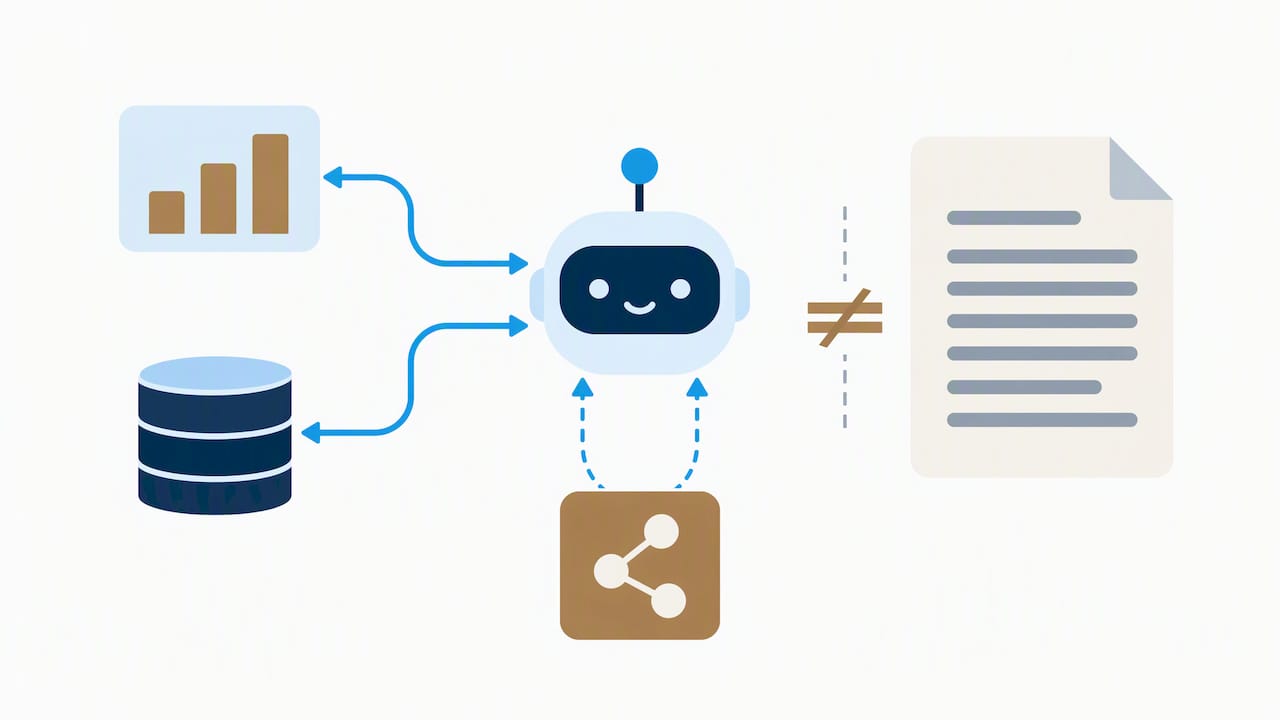
Our internal checklist before any chatbot goes live includes a vendor DPA review for every connected tool, an automated retention job that actually deletes transcripts on schedule rather than relying on someone to remember, and a manual test of the in-chat disclosure on a phone screen, since that is where most users will actually see it.
A lot of people still hear “AI” and think chatbot, and that narrow framing is part of why disclosure gets treated as an afterthought rather than a core part of the user experience. Treating the disclosure as part of the design, not a legal add-on, is what separates a policy that holds up from one that does not.
— Donovan Wells – Founder and CEO
Getting your chatbot privacy policy and setup done right
Drafting accurate clauses is only half the work. The other half is building a chatbot stack where the policy text actually matches what the system does, which is where AI Chat Bots integration support comes in. We review vendor data processing agreements, configure retention settings to match published schedules, and design in-chat disclosures that meet the placement and clarity points covered above.
We offer multiple tiers of AI chatbot plans to accommodate varying data handling and integration needs, starting with a basic option and scaling up accordingly. If you want a professional review of your current chatbot setup or help building one from scratch, request a quote through our AI chatbot plans page and we’ll walk through what your specific stack requires.
This article is general information, not a substitute for advice from a qualified lawyer. Consult a qualified legal professional about your own circumstances before acting on anything here.
FAQ
Are chatbot conversations private?
Chatbot conversations are generally not private in the way a personal conversation would be: most platforms log messages for quality review, support, or model improvement unless the provider states otherwise. Review the specific chatbot’s privacy policy to see what is retained and for how long.
What shouldn’t you share with ChatGPT?
Avoid sharing health details, financial account numbers, passwords, or other sensitive identifiers in any AI chat, since that information may be retained or used to improve the service depending on the provider’s settings. Stanford HAI advises caution about what users input into AI chatbots for this reason.
Will ChatGPT leak my data?
Language models carry a documented risk of memorizing and occasionally surfacing fragments of data they were trained or exposed to, which is why NIST’s generative AI guidance recommends operators monitor outputs and test for unintended disclosure. The risk is reduced, not eliminated, through monitoring, access controls, and clear data-handling policies.
What is ChatGPT’s privacy policy?
OpenAI’s privacy policy outlines the categories of personal data it collects, how that data is used, who it may be disclosed to, how long it is retained, and what rights users have, along with separate disclosures for U.S. state residents. For chatbots built on top of such platforms, the site or app operator is typically the controller responsible for its own end-user notice.
Do I need user consent to collect chatbot data?
Consent requirements depend on what you collect and where your users are located: routine support data often relies on contract performance or legitimate interest, while sensitive data or data used for advertising usually requires affirmative opt-in. State laws and GDPR, where applicable, set the specific threshold for your audience.
Sources
- NIST AI Risk Management Framework guidance (NIST.AI.600-1)
- FTC decision and order (example enforcement language)