
TL;DR:
- Web hosting is a major expense that impacts site speed, security, and revenue far beyond the monthly fee.
- Choosing the cheapest plan often leads to hidden costs like downtime, developer work, and SEO decline, which can surpass initial savings.
Web hosting is the single largest ongoing expense that business owners consistently underestimate when budgeting for their online presence. The role of hosting in web costs extends far beyond the monthly invoice. It shapes your site’s speed, uptime, security posture, and ultimately your revenue. Hosting costs range from $3/month for shared plans to over $5,000/month for enterprise cloud, with the median small business paying about $35/month. That spread tells you everything: the plan you choose today sets the financial ceiling for your entire digital operation.
What cost factors make up your website hosting expenses?
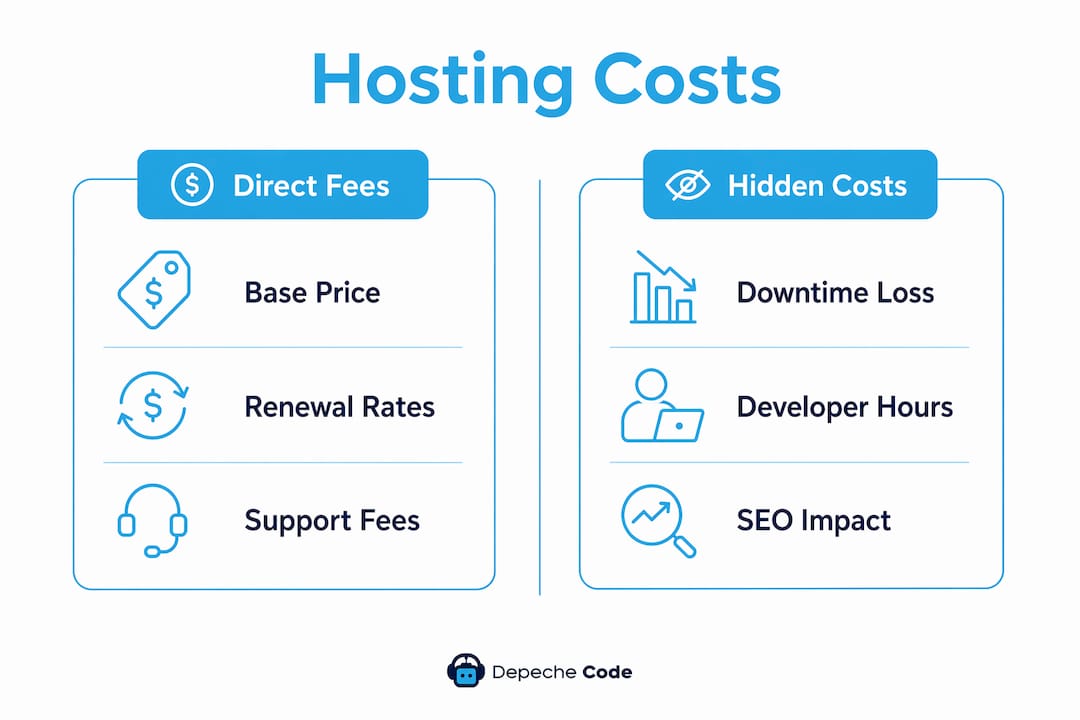
Hosting expenses split into two categories: direct fees and hidden costs. Most business owners budget only for the direct fees and get blindsided by everything else.
Direct fees include your base hosting plan, domain renewal, SSL certificates, and any managed service add-ons. These are predictable. The problem is that introductory pricing jumps 3–5 times on renewal. A plan advertised at $3.99/month can renew at $12–$18/month. Long-term costs average 2–3 times the initial price. Business owners who lock in a one-year deal often face a shock when year two arrives.
Hidden costs are where the real damage happens. These include:
- Downtime losses. A single outage during a peak sales period can cost thousands in lost revenue.
- Developer hours. Cheap hosting requires 3–5 hours per month of manual maintenance, which adds up fast.
- SEO decline. Slow load times hurt your search rankings, which raises your customer acquisition cost over time.
- Security incidents. Budget hosts rarely include proactive security. A breach means recovery costs, legal exposure, and lost customer trust.
- Bandwidth and egress fees. Cloud hosting bills grow with traffic. Real cloud costs often run 1.7x–2.2x the base compute price once bandwidth, backups, and snapshots are included.
Here is a realistic cost range by hosting type:
| Hosting type | Monthly base cost | Hidden cost risk | Best for |
|---|---|---|---|
| Shared | $3–$15 | High (downtime, slow speed) | Personal sites, early startups |
| Managed WordPress | $25–$200 | Low (included maintenance) | Small to mid-size businesses |
| VPS | $20–$100 | Medium (requires some management) | Growing businesses with dev resources |
| Cloud (unmanaged) | $0–$5,000+ | High (egress, backups, support) | Enterprise or high-traffic sites |
Pro Tip: Always calculate your total cost of ownership, not just the monthly fee. Add renewal pricing, expected maintenance hours, and one downtime incident per year to get an honest annual number.
How does hosting performance affect your revenue and marketing costs?
Hosting quality directly determines how fast your site loads, and load speed is a revenue variable. Every 1-second delay in page load reduces conversions by an average of 7%. For an ecommerce site generating $10,000/month, that single second costs $700 in lost sales every month.
The financial impact of poor hosting performance shows up in several ways:
- Bounce rates climb when pages load slowly, meaning your paid ad spend drives visitors who leave before converting.
- Core Web Vitals scores drop, which Google uses as a ranking signal. Lower rankings mean higher cost per click to maintain traffic volume.
- Significant downtime events can cause losses exceeding $12,000 in a single night during peak periods like Black Friday.
- Customer support volume increases when site errors frustrate visitors, adding operational cost.
Hosting performance is not a technical metric. It is a financial one. Every millisecond of latency is a fraction of a conversion you never completed, and every hour of downtime is revenue your competitor collected instead.
Slow hosting acts as a financial tax on your marketing budget. You pay to drive traffic, then lose that investment because the site cannot perform under load. Performance-optimized hosting reduces your effective cost per acquisition by keeping visitors on the page long enough to convert.
Pro Tip: Run a Core Web Vitals audit using Google Search Console before choosing a hosting plan. If your current host fails the audit, the cost of switching is almost always lower than the ongoing revenue loss.

What hosting options exist and how do their costs compare?
Understanding the web hosting pricing structure for each option helps you match cost to business need rather than defaulting to the cheapest plan available.
Shared hosting
Shared hosting places your site on a server with hundreds of other sites. Base costs run $4–$15/month, but shared hosting requires 3–5 hours of manual maintenance per month and carries real revenue risk during traffic spikes. The apparent savings disappear quickly when you factor in developer time and downtime exposure.
Managed WordPress hosting
Managed WordPress hosting costs $25–$200/month and includes automatic updates, security monitoring, and daily backups. Managed hosting saves costs related to plugins and maintenance despite charging $300–$1,800/year more than entry-level shared plans. For sites with more than 50,000 monthly visits, the math almost always favors managed hosting.
VPS hosting
A virtual private server (VPS) gives your site dedicated resources within a shared physical machine. Costs run $20–$100/month. VPS hosting suits businesses with in-house technical staff who can handle server management. Without that expertise, the savings evaporate in developer fees.
Cloud hosting
Cloud hosting scales dynamically with traffic, which sounds ideal until the bill arrives. Cloud billing multipliers of 1.7x–2.2x on base compute price are standard once you add egress bandwidth, automated backups, snapshots, and premium support. Budget carefully. A $50/month compute estimate can become a $110/month actual bill.
Dedicated hosting
Dedicated hosting gives you an entire physical server. Costs start around $100/month and climb to $500/month or more. This option suits high-traffic sites with strict compliance or security requirements. Most small and mid-size businesses do not need it.
The most common pricing trap across all categories is the introductory offer. Providers advertise low rates to win your signup, then charge full price at renewal. Always check the renewal rate before committing to any plan. A 2026 cost breakdown for business websites shows renewal pricing is one of the top three budget surprises for first-time site owners.
How to make cost-effective hosting decisions for your business
Choosing the right hosting plan is a financial decision, not a technical one. Follow this framework to avoid overpaying or underspending.
- Assess your traffic and revenue dependence. A site that generates leads or direct sales needs uptime and speed guarantees. A brochure site with low traffic can tolerate more risk.
- Calculate total cost of ownership. Add your base plan, renewal rate, expected maintenance hours at your developer’s hourly rate, and one downtime incident. Compare that number across hosting types.
- Match hosting type to business stage. Early-stage businesses with minimal traffic can start on shared hosting. Any site generating consistent revenue should move to managed or VPS hosting.
- Read the renewal pricing before signing. The advertised rate is rarely the rate you pay in year two. Confirm the renewal price in writing.
- Evaluate support quality. Budget hosts offer ticket-only support with 48-hour response times. When your site goes down at 2:00 AM before a product launch, that response time costs you money.
- Plan for growth. Switching hosts mid-growth is disruptive and expensive. Choose a plan that can scale without requiring a full migration within 12 months.
The hidden infrastructure tax on cheap hosting includes not just downtime but developer hours, security patches, and the compounding SEO damage from slow performance. Understanding how to manage hosting as a business asset rather than a commodity purchase is the single most effective way to reduce long-term web costs.
Pro Tip: Factor renewal pricing, support tier, and scalability into every hosting comparison. A plan that costs $20/month more now but eliminates $200/month in developer maintenance pays for itself in three months.
Businesses that treat hosting as a pure cost center consistently overspend on recovery. Businesses that treat it as a performance investment consistently reduce their total web budget over time.
Key Takeaways
Hosting determines both your fixed monthly web expenses and your variable costs through performance, security, and maintenance demands.
| Point | Details |
|---|---|
| Hidden costs dominate | Downtime, developer hours, and SEO decline cost far more than the monthly hosting fee. |
| Renewal pricing is a trap | Introductory rates jump 3–5 times on renewal; always confirm the year-two price before signing. |
| Performance is revenue | A 1-second load delay reduces conversions by 7%, making fast hosting a direct revenue factor. |
| Managed hosting pays off | Sites with over 50,000 monthly visits typically save money with managed hosting despite higher base fees. |
| Cloud costs require multipliers | Real cloud bills run 1.7x–2.2x the base compute price; budget accordingly to avoid overruns. |
Why I stopped treating hosting as a line item
After working with dozens of business owners on their web budgets, the pattern is always the same. They pick the cheapest hosting plan available, then spend the next 12 months paying for that decision in developer fees, lost rankings, and the occasional catastrophic outage. The monthly fee is the smallest part of the cost.
What I have found is that business owners who invest in performance-grade hosting from the start spend less over a three-year period than those who start cheap and upgrade reactively. The upgrade itself costs money. The migration disrupts SEO. The downtime during the transition loses sales. None of that shows up in the original budget comparison.
The uncomfortable truth is that hosting is a marketing expense disguised as a technical one. If your site is slow, your paid ads are less effective. If your site goes down, your email campaigns drive traffic to a dead page. The hosting decision sits upstream of every other marketing investment you make.
My advice to any business owner reading this: treat your hosting budget the way you treat your ad budget. Protect it. Audit it quarterly. And never let the introductory price be the deciding factor. The real cost of cheap hosting is almost always higher than the cost of doing it right the first time.
— Donovan
How Depechecode helps you get hosting right from the start
Depechecode is a full-service digital agency based in Orlando that builds and manages websites designed to perform and scale. Business owners who work with Depechecode get more than a website. They get a hosting environment built for speed, uptime, and long-term cost efficiency.

Depechecode’s website design and development services include managed hosting configurations that eliminate the hidden costs most business owners discover too late. From SSL and security to performance monitoring and backups, every technical layer is handled so you can focus on running your business. If you are ready to stop paying the hidden price of underperforming hosting, Depechecode is the team to call.
FAQ
What is the average cost of web hosting for a small business?
The median small business pays about $35/month for web hosting. Costs range from $3/month for shared plans to over $5,000/month for enterprise cloud configurations.
Why does cheap hosting cost more in the long run?
Cheap hosting plans carry high hidden costs including downtime losses, developer maintenance hours, and SEO decline. These indirect expenses typically exceed $2,000–$5,000 per year beyond the base fee.
How does hosting affect SEO rankings?
Hosting directly affects Core Web Vitals scores, which Google uses as a ranking signal. Slow load times and frequent downtime lower your rankings, which increases your cost to maintain traffic volume.
What is the renewal pricing trap in web hosting?
Most shared hosting plans advertise low introductory rates that jump 3–5 times at renewal. A plan priced at $3.99/month can renew at $12–$18/month, making the long-term cost 2–3 times the initial price.
When should a business upgrade from shared to managed hosting?
A business should move to managed hosting when its site exceeds 50,000 monthly visits or when the site directly generates leads or revenue. At that point, the cost of downtime and maintenance on shared hosting exceeds the premium for managed plans.