

TL;DR:
- Effective homepage design combines 8 to 12 human-centric patterns with sequence-driven storytelling. Simultaneously, technical techniques like asynchronous loading and projection mapping ensure fast performance without sacrificing creativity. Focusing on clear content and a single primary goal guides the visual layout and user engagement strategies most successfully.
Your homepage is defined by the first design decision you make: generic or human. The best innovative homepage design ideas are not random creative choices. They are deliberate combinations of human-centric patterns and immersive interaction methods that separate your brand from the flood of AI-generated defaults. High-performing websites combine 8 to 12 specific design patterns to break away from the predictable blue-purple gradients and card layouts that AI tools produce by default. That number matters because fewer than eight patterns rarely creates a strong enough signature, while more than twelve risks visual chaos. This article gives you the specific techniques, performance considerations, and trend insights to build a homepage that earns attention and keeps it.
1. What human-centric design patterns make homepages stand out?
Human-centric design patterns are specific visual and structural choices that reflect deliberate human judgment rather than algorithmic defaults. Avoiding AI centroid designs reduces the trust gap between your brand and your visitors. When every site looks the same, yours needs to feel different on a gut level.
The industry has identified 73 distinct patterns that break the AI default aesthetic. The most effective ones include:
- Oversized display typography that fills the viewport and forces a reading rhythm
- Custom SVG icons built for your brand rather than pulled from generic libraries
- Asymmetric layouts that create visual tension and guide the eye deliberately
- Hand-drawn or textured elements that signal human craft
- Unexpected color palettes that move beyond safe corporate blues and grays
- Negative space used as a design element, not just empty background
Combining 8–12 of these patterns creates a design signature that visitors recognize and remember. Each pattern alone is a small signal. Together, they build a brand identity that no AI tool can replicate by default.
| Generic AI default | Human-centric alternative |
|---|---|
| Blue-purple gradient hero | Custom brand color with textured overlay |
| Card-based feature grid | Asymmetric column layout with varied type sizes |
| Stock icon library | Custom SVG icons built for the brand |
| Centered, symmetric layout | Z-pattern or diagonal composition |
| Standard sans-serif body text | Curated type pairing with editorial hierarchy |

Pro Tip: Start your redesign by listing every element on your current homepage. Flag anything that could appear on a competitor’s site unchanged. Replace each flagged element with a brand-specific alternative.
Explore how redesigning with expertise helps you move away from AI defaults systematically.
2. How can immersive, sequence-driven storytelling enhance homepage experience?
Sequence-driven design treats your homepage as a temporal experience rather than a static page. Designing with restraint and removing elements allows content to breathe and builds a rhythm that mirrors real-world progressions. That rhythm is what keeps visitors scrolling instead of bouncing.
The core shift is this: stop thinking about your homepage as a brochure. Start thinking about it as a short film with chapters. Each scroll position is a scene. Each section reveals the next piece of the story.
Effective sequence-driven techniques include:
- Scroll-triggered reveals that introduce content only when the visitor reaches it
- Parallax depth layers that create a sense of physical movement through space
- Progressive text disclosure where headlines appear word by word as you scroll
- Section transitions that feel like turning a page rather than jumping to an anchor
Audio tied to user scroll actions, combined with UI elements that behave as part of the story, creates atmosphere that pure visuals cannot achieve alone. Interface elements become characters. The site feels alive.
“Designers should treat websites as temporal sequences rather than static structures to maintain user immersion.” — Codrops, 2026
This approach works especially well for brands in creative industries, hospitality, and premium consumer goods. For service businesses, a lighter version of sequence-driven design, such as scroll-triggered section reveals without audio, delivers engagement gains without alienating more conservative audiences. Pair this with visual storytelling principles to sharpen your narrative structure before you write a single line of code.
3. What performance and UX considerations support creative homepage designs?
Creative homepage designs fail when they sacrifice speed. Hero sections should balance visual depth and load speed by prioritizing above-the-fold messaging and using asynchronous loading for non-critical elements. A visually stunning homepage that takes four seconds to load loses visitors before they see a single design choice.
Three technical practices protect performance without killing creativity:
- Asynchronous loading for animations, videos, and decorative assets below the fold
- Projection mapping for visual depth effects, which wraps detailed imagery onto simple geometric shapes instead of loading dense 3D meshes
- GSAP’s Observer API for scroll interactions, which unifies mouse, touch, and trackpad inputs into one consistent experience
Projection mapping creates depth and scale without the performance cost of heavy 3D geometry. You get the visual impact of a three-dimensional environment at a fraction of the file size. That tradeoff is what makes immersive design viable for real business sites.
GSAP’s Observer API solves a specific problem that native scroll event handlers create: inconsistent behavior across input devices. A scroll-driven animation that feels smooth on a mouse may stutter on a trackpad. The Observer API eliminates that inconsistency.
Pro Tip: Test your homepage on a throttled 3G connection before launch. If your hero section takes more than two seconds to show meaningful content, your load sequence needs restructuring, not your design.
User experience drives conversions directly, so performance is not a technical afterthought. It is a design decision.
4. Which homepage design trends inspire modern creators in 2026?
The strongest modern homepage layouts share one quality: they make a clear visual commitment within the first viewport. Memorable layouts like z-pattern and interactive exploration must prioritize conversion clarity alongside visual ambition. A beautiful homepage that confuses visitors about what to do next is a failed homepage.
The trending layout approaches worth studying in 2026 include:
- Full-screen immersive hero with a single headline, one call to action, and a scroll prompt
- Column grid layouts that divide the viewport into distinct editorial zones
- Typographic-first designs where the headline IS the visual, with no hero image
- Split-screen compositions that present two contrasting ideas or audiences simultaneously
- Interactive exploration layouts where visitors click or hover to reveal content layers
| Layout type | Best for | Key feature | Conversion risk |
|---|---|---|---|
| Full-screen immersive | Creative agencies, luxury brands | Maximum visual impact | Low if CTA is prominent |
| Column grid | SaaS, professional services | Organized information density | Low |
| Typographic-first | Editorial, fashion, culture | Bold brand voice | Medium if message is unclear |
| Split-screen | Dual audiences, product comparisons | Clear choice architecture | Low |
| Interactive exploration | Portfolio, entertainment | High engagement | High if navigation is unclear |
Adapting these trends to your industry requires one judgment call: how much friction does your audience tolerate? A law firm’s visitors want clarity fast. A creative studio’s visitors expect to be surprised. Current design trends show that the most effective homepages match layout ambition to audience expectation, not to what looks impressive in a design portfolio.
Quality web design pays off most when the layout choice reflects a genuine understanding of who is visiting and what they need to decide.
5. How to redesign a homepage with these principles in mind
Redesigning a homepage is not a visual exercise. It is a strategic one. High-quality visual storytelling that integrates interactivity elevates user engagement beyond what static pages can achieve, but only when the underlying content strategy is solid first.
Start with content, not layout. Write your homepage headline before you open a design tool. If you cannot state your brand’s core value in one sentence, no layout will fix that gap. The design amplifies the message. It does not replace it.
A practical redesign sequence looks like this:
- Audit your current homepage against the 73 human-centric pattern list. Count how many generic defaults you are using.
- Define your homepage’s single primary goal. One conversion action per page.
- Map the scroll sequence as a storyboard. What does the visitor learn at each stage?
- Choose 8–12 human-centric design patterns that fit your brand voice.
- Build the hero section first. Test load speed before adding any scroll-driven effects.
- Add interaction layers progressively. Start with scroll reveals, then add parallax, then consider audio only if it serves the brand.
Responsive web design is not optional at any stage of this process. Every creative choice you make on desktop must translate to mobile without breaking the experience. Mobile-first design principles should constrain your layout decisions from the start, not be retrofitted at the end.
Key takeaways
The most effective homepage designs combine 8–12 human-centric patterns with sequence-driven storytelling, while maintaining fast load times and a single clear conversion goal.
| Point | Details |
|---|---|
| Use 8–12 human-centric patterns | Fewer patterns fail to create a brand signature; more than twelve creates visual noise. |
| Treat scroll as a storytelling tool | Sequence-driven design keeps visitors engaged by revealing content progressively. |
| Protect performance with smart techniques | Projection mapping and asynchronous loading deliver visual depth without slow load times. |
| Match layout ambition to audience tolerance | Creative layouts work for some industries; clarity-first layouts work better for others. |
| Redesign content before layout | A strong headline and clear conversion goal must exist before any design decisions are made. |
What I have learned about balancing creativity and clarity
The hardest part of homepage design is not the creative work. It is the restraint.
Every project I have seen go sideways followed the same pattern: the team fell in love with an interaction or a visual effect and built the entire page around it. The scroll animation was beautiful. The projection mapping was technically impressive. But visitors could not figure out what the company actually did.
The insight that changed how I think about this: your homepage is not a portfolio piece. It is a decision-support tool. Visitors arrive with a question. Your job is to answer it fast, then earn the right to show them something beautiful.
The sequence-driven approach works precisely because it respects that order. You answer the core question in the hero section. Then you use the scroll journey to build desire, trust, and context. The immersive elements come after the visitor has already decided to stay.
The 8–12 pattern rule is also more useful than it sounds. It gives you a concrete target. You are not trying to make something “feel unique.” You are trying to hit a specific count of deliberate, brand-specific choices. That framing turns a subjective creative conversation into a measurable design audit.
My honest advice: pick your patterns before you pick your layout. Know what makes your brand visually distinct. Then find a layout that showcases those patterns, not the other way around.
— Donovan
Depechecode brings your homepage vision to life
Building a homepage that combines human-centric patterns, scroll-driven storytelling, and fast load times takes more than design talent. It takes technical depth.
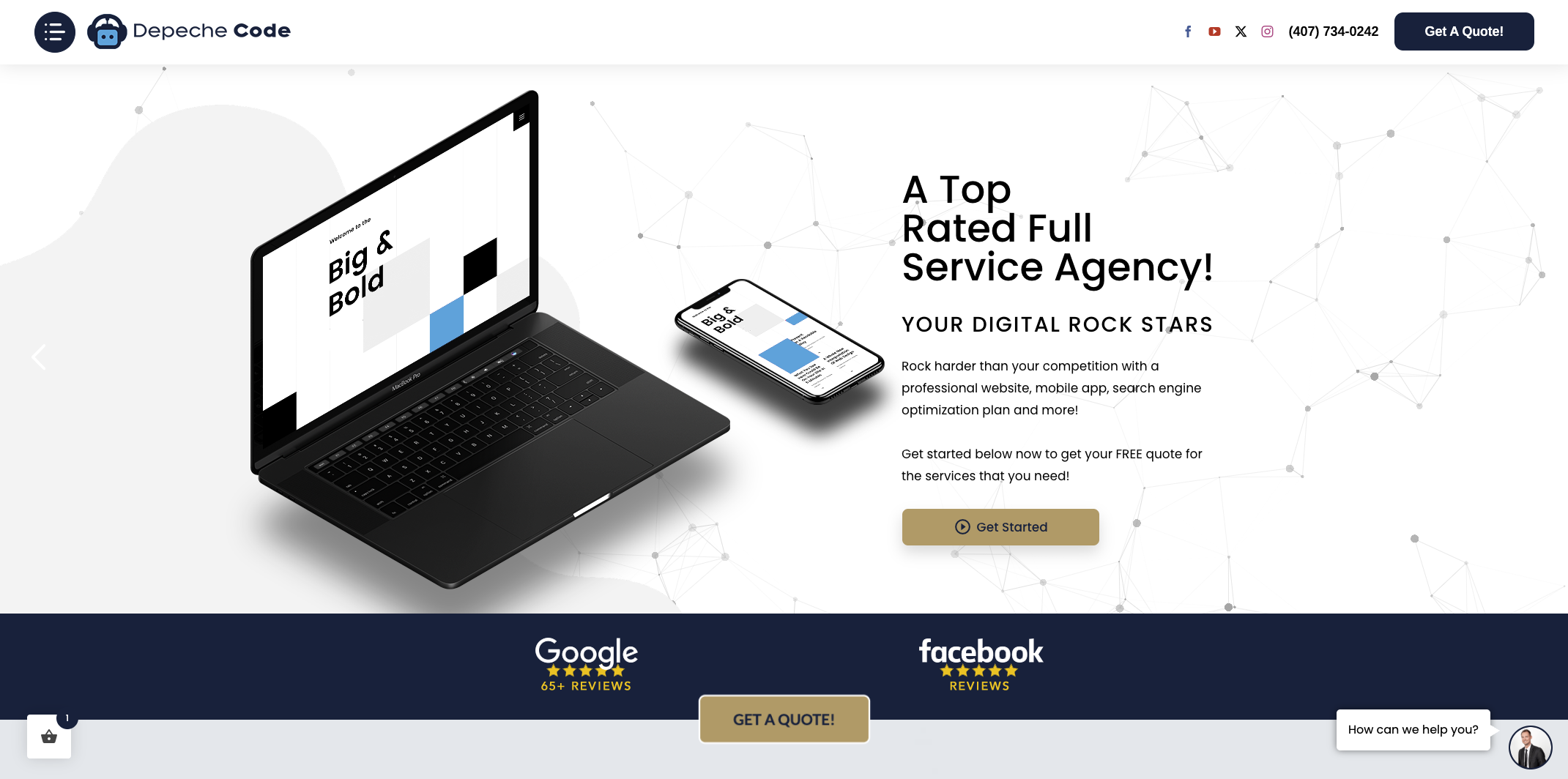
Depechecode is a full-service digital agency based in Orlando that builds high-performance websites for businesses that want to stand out. The team handles everything from initial concept and layout strategy to development, performance testing, and ongoing maintenance. Whether you are starting from scratch or need to move away from a generic template, Depechecode delivers custom solutions built around your brand’s specific goals. If you are ready to build a homepage that actually converts, see what a free website from Depechecode looks like as a starting point.
FAQ
How many design patterns does a homepage need to stand out?
High-performing homepages combine 8–12 specific human-centric design patterns. Fewer than eight rarely creates a strong enough brand signature to differentiate from AI-generated defaults.
What is sequence-driven homepage design?
Sequence-driven design treats a homepage as a temporal experience where scroll position controls content reveals. Each section functions as a chapter in a story rather than a static block of information.
Does immersive design hurt page load speed?
Not if you use the right techniques. Projection mapping and asynchronous loading deliver visual depth without heavy file sizes, and GSAP’s Observer API handles scroll interactions efficiently across all input devices.
What is the biggest mistake in homepage redesigns?
Starting with layout instead of content. Your headline and primary conversion goal must be defined before any visual decisions are made. Design amplifies a clear message; it cannot replace a missing one.
Which homepage layout works best for business websites?
Column grid and full-screen immersive layouts perform well for most business sites. The right choice depends on how much visual friction your audience tolerates and how complex your product or service is to explain.