

Topic clusters are groups of interlinked pages built around one central hub, with supporting spoke pages that each answer a specific subtopic. Their biggest payoff is clearer topical signals for search engines, which raises your odds of ranking and of being cited in AI-driven results. Below you get a step-by-step build, linking, and measurement plan you can run this quarter.
TL;DR:
- Give every spoke one distinct query, link it to the hub, and use a canonical tag that points to that page itself.
- Use 2.5 seconds for Largest Contentful Paint, a crawl cleanliness ratio of 0.96, and 8–12 internal links per page as visibility benchmarks, not rigid targets.
- Prioritize one topic tied to revenue, research learning, comparison, and buying intent, then publish spokes before promoting the hub into sitewide navigation.
- Group URLs by folder or regular expression, track assisted conversions alongside traffic, and review cluster performance quarterly rather than judging individual pages alone.
- After two refreshes without gaining impressions or assisting conversions, merge a spoke into a stronger page or prune it, and audit links after each batch.
Table of Contents
- What topic clusters are: hubs, spokes, and the links between them
- Why topic clusters matter now: SEO, authority, and AI search
- Step-by-step: plan, research, and build a topic cluster
- Wiring the cluster: internal links, anchors, and tested rollouts
- Content formats and page types for hubs and spokes
- Measure cluster performance: KPIs, grouping, and cadence
- Common mistakes and quick fixes
- Updates and maintenance: keeping clusters relevant
- How we run cluster projects: our agency checklist
- Get cluster planning and execution from our team
- FAQ
- Sources
What topic clusters are: hubs, spokes, and the links between them
A topic cluster has three moving parts. The pillar (hub) page covers a broad topic in depth and points to everything else. Spoke (cluster) pages each answer one narrower question and link back to the hub. Internal links are the wiring: they tell crawlers and readers how the pages relate, which is why internal linking is what turns a pile of articles into a cluster.
Keep the structure legible in your URLs. A folder pattern such as /topic/ for the hub and /topic/subtopic/ for spokes makes the relationship obvious, though it is a convention, not a ranking requirement. Give every page a self-referencing canonical tag so the hub stays the authoritative version, and avoid canonicalizing spokes to the hub, which would erase them from the index.
Use this checklist to map content you already have:
- List every page that touches your core topic, including old blog posts and product pages.
- Pick one page as the hub: the broadest, most linked-to, most useful one.
- Label each remaining page as a spoke, a merge candidate, or a prune candidate.
- Note which spokes lack a link to the hub, and which hub sections lack a spoke.
- Flag overlapping pages that target the same query, since they compete with each other.
Why topic clusters matter now: SEO, authority, and AI search
Search engines reward sites that cover a subject completely, and AI features have raised the stakes. Google says AI Overviews and AI Mode ground their answers in indexed pages, and that Search Essentials and E-E-A-T signals still apply. A page has to be indexed and eligible for snippets before it can be cited at all.
AI answers also tend to expand one query into several related sub-queries. A cluster that covers the main question plus its recurring subtopics gives you more chances to be pulled into that process. The practical advice from industry guidance is to cover recurring subtopics rather than chase every transient variation.
Technical health sets the ceiling. One study of technical parameters found that technical quality can dominate search visibility.
The same study points to practical thresholds: a Largest Contentful Paint of 2.5 seconds, a crawl-clean ratio of 0.96, and 8–12 internal links per page, as key markers tied to search visibility.
What this means for the business:
- Build clusters around topics tied to revenue or high-value funnels first.
- Treat speed, crawlability, and link density as part of cluster work, not a separate project.
- Expect fewer, stronger clusters to beat many thin ones.
- Pair content decisions with search intent, so each page earns its place.
Step-by-step: plan, research, and build a topic cluster
This workflow runs from research to launch. Each step produces something your team can review before moving on.
- Pick a core topic tied to business goals. Start with the topic closest to revenue: the service you most want to sell or the problem your best customers search for. If you can only build one cluster this quarter, build that one. A hub on a topic nobody buys from is a traffic project, not a business project.
- Research subtopics and intent. Pull candidate subtopics from keyword tools, but do not stop there. Sales call notes, support tickets, and community threads reveal the exact words buyers use and the objections they raise. Group each candidate by intent: learning, comparing, or buying.
- Map the hub and spokes. Decide what each page answers and what it leaves to others. The hub should summarize and route; spokes should go deep. Write a one-line scope statement per page so two writers never target the same question.
- Create content that fits each intent. Short definitions deserve answer-first pages. Aggregation deserves a long-form pillar. Decisions deserve comparison or product pages, where clicks still matter. Our guide to website content creation covers briefs and formats in more depth.
- Schedule, QA, and add trust signals. Set an editorial calendar, assign named authors with bylines, require sourcing for every factual claim, and run a QA pass for accuracy and duplicate coverage. These are the E-E-A-T signals that AI features reapply when selecting pages.
- Soft launch the wiring. Publish spokes, link them to the hub, confirm indexing in Search Console, and only then push the hub into your navigation and sitewide links.
A few practical details that save rework:
- Write the hub last or revise it last, because its summary sections depend on what the spokes actually say.
- Cap each spoke at one primary question, and send adjacent questions to a different spoke.
- Keep a living spreadsheet with URL, role, target query, owner, status, and last refresh date.
- Check whether an existing page can be upgraded before commissioning a new one.
- Place calls to action after the page has done its explanatory job. Educational pages that lead with a sales ask tend to frustrate the reader, a point conversion specialists make about “Book a Demo” buttons on top-of-funnel content.
Treat the first cluster as a pilot. You will learn which intents your audience cares about, how long reviews take, and where your CMS makes linking painful. Apply those lessons before you scale to the second and third clusters.
Wiring the cluster: internal links, anchors, and tested rollouts
Links are where clusters succeed or quietly fail. The baseline rules are simple: every spoke links up to the hub, the hub links down to every spoke, and spokes link sideways only when the next question is genuinely related. Use descriptive anchor text that names the destination topic, not “click here” or the same exact-match phrase everywhere.
Link density matters, but not as a number to hit blindly. The earlier technical study associates 8–12 links per page with better visibility, so treat that as a reference range and check it against how your pages actually read.
Rewiring many pages at once carries risk, because links redistribute authority. Research on WebKnoGraph models a website as a directed graph and proposes candidate links using semantic embeddings. Its findings are useful: expert-assisted selection preserves semantic coherence, while fully automatic selection can produce stronger average authority gains. Neither should ship unreviewed, and the authors recommend evaluating candidate links before deployment.
A staged workflow keeps you safe:
- Generate candidate links from your crawl and semantic similarity.
- Have an editor approve or reject each batch.
- Roll out to a small group of pages first.
- Monitor rankings, crawl stats, and authority metrics before expanding.
Before any batch goes live, run this test list:
- Crawl the site to confirm no new orphaned pages or broken targets.
- Preview how authority shifts if you have a link graph or PageRank tool.
- Read a sample of links in context to confirm the sentence still makes sense.
- Check that no spoke now links to a competing page on the same query.
Pro Tip: Add links where a reader would naturally want the next answer, then let the tools confirm it. If a link only exists to move numbers, an editor will spot it and so will a user.
Content formats and page types for hubs and spokes
Match the format to the job the page does. The wrong format is a common reason a good topic underperforms.
- Hubs: long-form guides with jump links, a clear table of contents, and short summaries that route readers to each spoke. Avoid dumping full spoke content into the hub.
- Answer spokes: short, direct pages for definitions and quick questions, with the answer in the first two sentences.
- How-to spokes: numbered steps, screenshots, and templates the reader can use today.
- Comparison spokes: side-by-side evaluations for readers choosing between approaches.
- Transactional spokes: service or category pages where the reader is ready to act, linked from the relevant educational pages.
When several sites say the same thing, none stands out. Original test data, expert commentary, and real examples give answer engines something non-commodity to cite, so add them wherever you have them, and never invent them where you do not.
For metadata, write a unique title and description per page that leads with the page’s own topic, and use an accurate heading hierarchy. Add structured data that matches visible content, such as Article, FAQPage, or BreadcrumbList, so the hub and spoke relationships are reinforced in the markup. Our overview of the role of content in SEO shows how these pieces fit a wider plan.
Measure cluster performance: KPIs, grouping, and cadence
Measure the cluster as a unit, not page by page. Group URLs by folder or by a regular expression in Search Console and your analytics platform, so one report shows the whole cluster.
Track these indicators:
- Impressions and clicks for all cluster queries
- Average ranking for the hub and for each spoke’s target query
- Assisted conversions, meaning visits to cluster pages that appear earlier in a path that ends in a lead or sale
- AI citations and mentions, when your tools can detect them
- Indexing status and crawl errors across the cluster
Industry guidance recommends reporting clusters against pipeline metrics and refreshing them quarterly, rather than judging them on traffic alone.
To attribute assisted conversions, tag the cluster folder as a content group, then review conversion paths that include any page in it. A spoke that rarely converts directly may still start most of your best journeys.
Run a quarterly review. Apply a two-refresh rule: if a spoke has been updated twice and still fails to gain impressions or support conversions, merge it into a stronger page or prune it. That keeps the cluster tight.
If you need a business case for the effort, our write-up on SEO for business ROI shows how to frame it.
Common mistakes and quick fixes
Most cluster problems come from rushing or over-scaling. These are the ones we see most often:
- Scaled, low-value pages. Publishing dozens of thin pages to capture every possible variation dilutes the cluster. Fix it by consolidating them into fuller pages that answer the recurring questions.
- Orphaned spokes. A page with no links pointing to it is invisible to crawlers and readers. Re-link it from the hub and from at least one related spoke, and surface it in navigation where it fits.
- Premature CTAs. A “Book a demo” banner at the top of an educational page works against the reader. Move it below the explanatory content.
- Missing authorship and sourcing. Anonymous, unsourced pages weaken trust signals. Add a named author, a short bio, and links to the sources behind your claims.
- Overlapping targets. Two pages chasing one query split your signals. Pick a winner and redirect or rewrite the other.
- Launching the hub before the spokes exist. A hub full of dead ends frustrates users. Publish spokes first, or link only to what is live.
Updates and maintenance: keeping clusters relevant
A cluster is not a one-time project. Facts age, search results change, and AI features pull from whatever looks freshest and most reliable, so schedule maintenance as a routine.
Start with a quarterly audit of each cluster. Check which spokes lost impressions, which queries now trigger new result types, and which statistics or screenshots are out of date. Prioritize updates on the pages closest to revenue, since those carry the most risk when they go stale.
Refresh with substance, not cosmetics. Changing the date on a page without improving it helps nobody. Replace outdated figures with current, sourced ones, add new subtopics that readers now ask about, and tighten sections that have grown vague. Record every refresh in your tracking sheet so the two-refresh rule has data behind it.
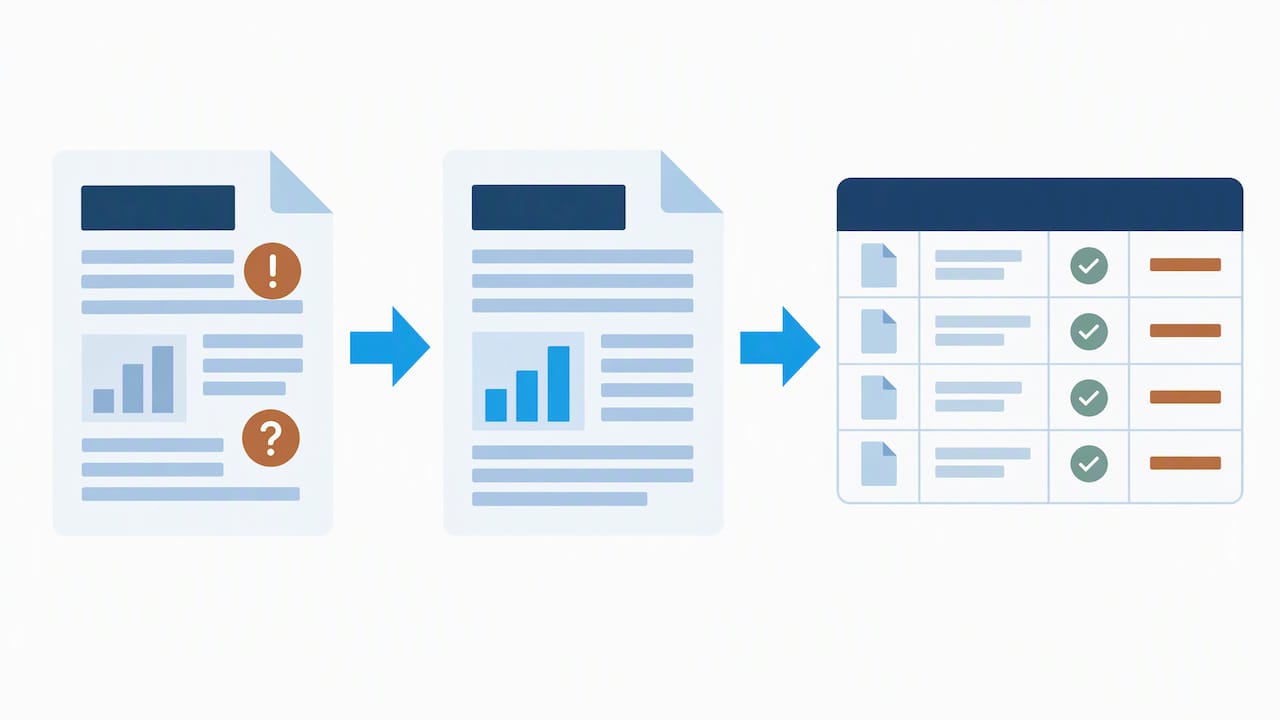
Revisit the links too. New pages should be wired into the cluster as they appear, and removed pages need redirects so authority is not lost. Run a crawl after each batch of changes to catch broken links and orphans.
Finally, keep an eye on the technical baseline. Load speed, crawl cleanliness, and indexing can degrade after a redesign or plugin update. Proper hosting and maintenance keeps those foundations from slipping while your content team focuses on the words.
How we run cluster projects: our agency checklist
Our view is that the best clusters come from process, not volume. Fewer, better-planned clusters outperform sprawling content calendars, and the work succeeds or fails on discipline at each stage. This is the checklist we follow:
- Audit and prioritize. We list candidate topics and rank them by pipeline impact, so the first cluster supports the offers that matter most to your business.
- Design the architecture. We define the hub, the spokes, the scope of each page, content briefs, and author assignments before anything is written.
- Wire in stages. We implement internal links in batches, review them, and watch authority and indexing before widening the rollout.
- Maintain on a cycle. We hold quarterly cluster reviews and refresh content that has slipped, applying the two-refresh rule to decide what to merge or prune.
We resist the temptation to publish at maximum speed. A cluster built carefully and measured honestly gives you something you can defend in a budget meeting.
Get cluster planning and execution from our team
If you want help turning this plan into a working cluster, we can take it from audit to launch. Our SEO plans cover keyword and intent research, content strategy, and ongoing optimization. When the site itself needs work, our website redesign and technical implementation services fix structure, speed, and navigation so your hub and spokes can perform, and our hosting and maintenance keeps them healthy afterward.

A good first step is a pilot: we audit your content, choose one revenue-tied topic, and build the first cluster with you. Request an audit through our services page and we will tell you where a cluster would pay off fastest.
FAQ
Are topic clusters still relevant?
Yes. Search engines and AI features still depend on indexed pages that clearly cover a subject, and Google states that AI features reapply Search Essentials and E-E-A-T. Clusters make that coverage easy to see.
What is the difference between a keyword cluster and a topic cluster?
A keyword cluster is a group of related search terms that one page can target. A topic cluster is a set of separate, interlinked pages built around one subject. Keyword clusters help you plan individual pages, while topic clusters organize the site.
What is an example of a content cluster?
A hub guide to email marketing could link to spokes on subject lines, list segmentation, deliverability, and automation workflows. Each spoke answers one question in depth and links back to the guide. The hub routes readers onward to whichever spoke fits their next need.
How do you create a topic cluster?
Choose a core topic tied to business goals, research the subtopics and intents around it, and map one hub and several spokes with clear scopes. Then write each page for its intent, link hub and spokes together with descriptive anchors, and review results quarterly.
Sources
- The Impact of Website Technical Parameters on Indexing Quality and Visibility in Search Engines
- WebKnoGraph: GNN-Powered Internal Linking
- How to build topic clusters for SEO and AI search
- skills/seo-geo/references/google-ai-optimization-guide.md